The 2026 MacBook Pro M5 may be one of Apple best laptops, but it is not the most powerful. Windows machines equipped with desktop class processors and dedicated NVIDIA RTX50 series GPUs are rewriting the rules of what a laptop is capable. We compared 5 Windows laptops to the MacBook Pro M5 and found that they beat it in terms of real world performance.
Apple’s M5 processor, at the heart of the 2026 MacBook Pro, is an engineering wonder. It’s hard to beat in many benchmarks, with a 30% increase of memory bandwidth compared to the M4 (now 153 GB/s), class leading single core performance and class leading battery efficiency.
When you plug a dedicated NVIDIA RTX5090 GPU in a laptop such as the Asus ProArt P16 or a 24-core Intel Core Ultra 9 processor in the Lenovo Legion 9i Gen 10 the MacBook Pro cannot keep up. Not in GPU accelerated render, not in gaming and not for workloads that require maximum multi-threaded performance.
Quick Comparison: All 5 Laptops vs MacBook Pro M5
Laptop
CPU
GPU
RAM
STARTING PRICE
BEST FOR
Razer Blade 14
AMD Ryzen AI 9 365
NVIDIA RTX 5070
32GB DDR5
$2,699
Gaming
Asus ProArt P16
AMD Ryzen AI 9 HX 370
RTX 5070 – 5090
Up to 64GB
$2,999
Creative
Lenovo Yoga Pro 9i Aura
Intel Core Ultra 9 285H
NVIDIA RTX 5050
32GB LPDDR5
$1,950
Productivity
Lenovo Legion 9i Gen 10
Intel Core Ultra 9 275HX
NVIDIA RTX 5080
Up to 64GB
$3,999
Performance
Asus Zenbook Duo
Intel Core Ultra 9 285H
Intel Arc iGPU
32GB
$1,799
Dual Screen
Razer Blade 14 Gaming Laptop
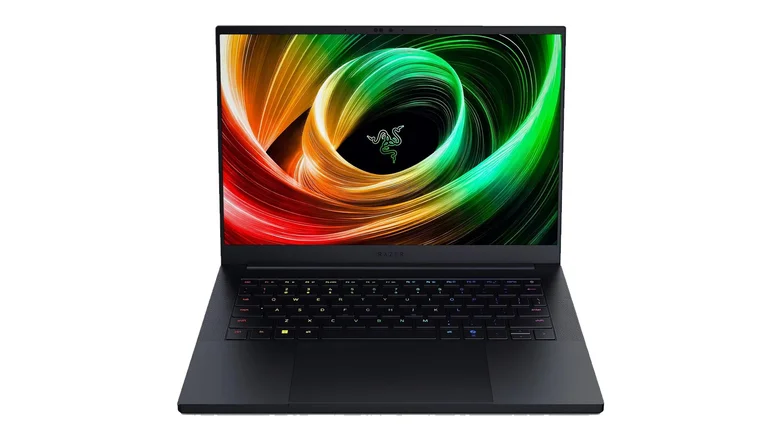
The Razer Blade 14 has the best Windows laptop that you can pack in a bag and not hurt your back. Razer Blade 14 is the thinnest gaming laptop Razer has ever made. Yet, it packs in hardware that makes MacBook Pro M5 seem tame when benchmarked for GPU performance. Razer’s Blade 14 notebook is proof you don’t have to carry around a monster 18-inch laptop to get serious gaming performance.
The RTX5070 laptop’s GPU beats that of the M5 by as much as 60%. The Razer Blade 14 is able to deliver 60+ FPS in real world games like Black Myth: Wukong and Black Ops 6 at 1440p. This is something that the MacBook Pro cannot do.
Razer Blade 14 Gaming Laptop dominates MacBook Pro for any GPU intensive task. The RTX 5070 has dedicated CUDA cores and Tensor Cores, which accelerates not only gaming but also video rendering and 3D work in DaVinci Resolve and Adobe Creative Cloud applications. The integrated GPU on the M5 lacks both VRAM and raw shading throughput.
Pros
Cons
RTX 5070 GPU far outperforms M5’s integrated GPU
Battery life shorter than MacBook Pro under gaming load
Stunning QHD OLED 120Hz display
RAM is soldered — not upgradeable
Compact and premium CNC aluminum build
Runs warm under sustained GPU load
Excellent I/O for a slim 14-inch laptop
macOS ecosystem unavailable
Thunderbolt 4 support for eGPU expansion
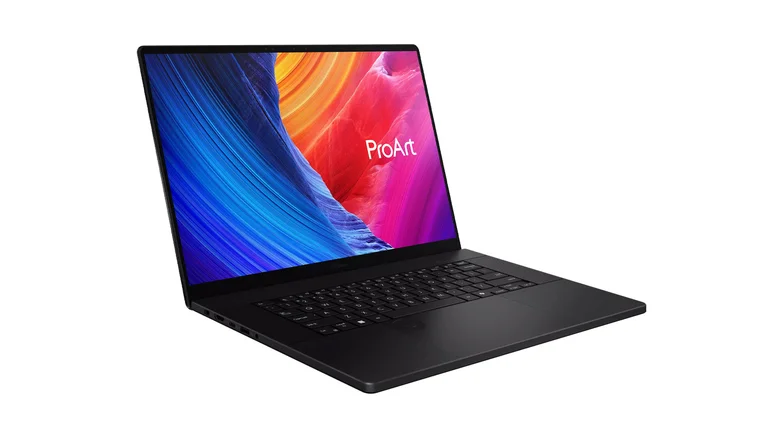
Asus ProArt P16 Laptop
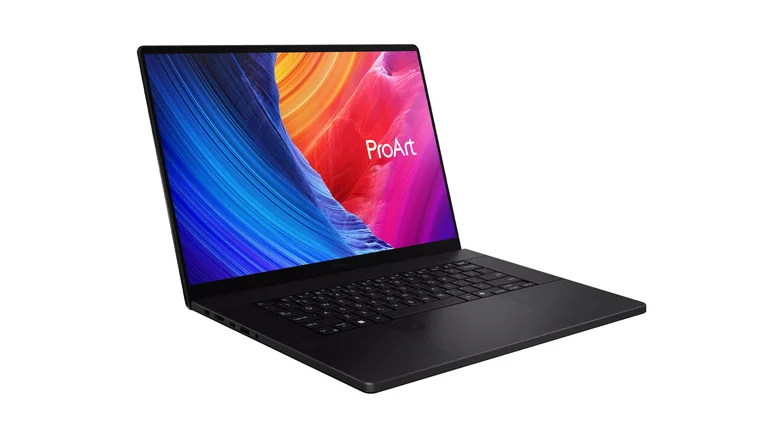
The Asus ProArt P16 laptop is the perfect solution for those who need a Windows laptop to compete with the MacBook Pro M5 on creative tasks. Designed for content creators such as filmmakers, 3D Artists and architects, the Asus ProArt P16 is a laptop that packs impressive hardware into a portable 16-inch form factor.
The top configuration comes with an NVIDIA RTX 5090 GPU. Benchmarks from nanoReview indicate that the RTX5090 is up to two times faster than the M4 Max 40-core GPU on GeekBench 6 or 3DMark. The MacBook Pro M5 processor simply does not have enough VRAM or shader performance for GPU-intensive workflows.
Full Specifications
CPU
AMD Ryzen AI 9 HX 370 (12-core)
GPU
NVIDIA RTX 5070 (base) / RTX 5090 (top-tier)
Display
16-inch 4K 120Hz OLED Touchscreen · 3840×2400
RAM
Up to 64GB DDR5
Storage
Up to 4TB NVMe SSD (2× 2TB slots)
NPU
AMD XDNA — 50 TOPS
Battery
90Wh · ~7–9 hrs productivity use
Weight
2.0 kg (4.4 lbs)
A MacBook Pro 64GB with unified memory costs the same as a MacBook Pro with half of the storage. It also has an integrated GPU, but no VRAM. At the same price, you can get 4TB of storage and an RTX-5090 with Asus ProArt P16. Apple does not offer this feature on any MacBook.
The 16-inch OLED touchscreen with 4K resolution is a game changer for digital artists, video editors and other professionals. It offers DCI-P3 color accuracy of 100% and ASUS ProArt calibration at the factory.
Pros
Cons
RTX 5090 option devastates M5 GPU benchmarks
Heavier than MacBook Pro at 2kg
4K 120Hz OLED touchscreen (MacBooks have no touch)
Battery life shorter under GPU load
Up to 4TB storage at the same price as MacBook
Fan noise audible under heavy workloads
50 TOPS NPU for AI-accelerated creative apps
Expensive at top RTX 5090 configuration
Excellent color accuracy for professional work
Lenovo Yoga Pro 9i Aura Edition
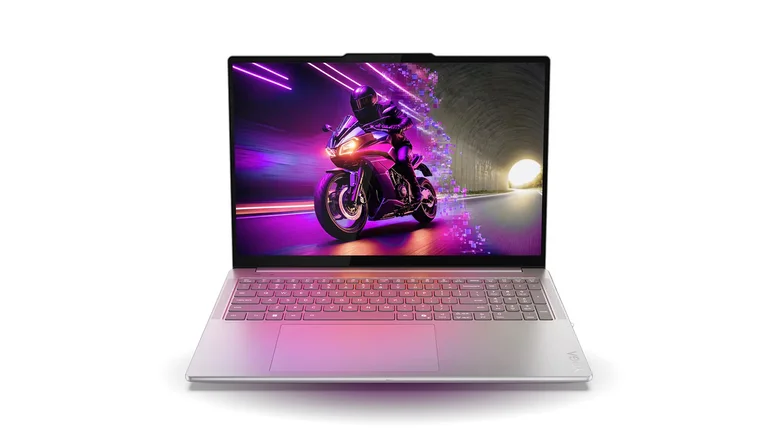
The Lenovo Yoga Pro 9i Aura Edition powerful productivity tool all packed into a 16-inch chassis.. The 9i Pro series has been one of the most premium Windows laptop lines, but the Aura Edition takes it a notch higher with Intel’s most recent multiprocessing technologies and a display that rivals anything that Apple offers.
The Intel Core Ultra 9 processor, which is based on the Yoga Pro 9i 16’s Intel Core Ultra 9 285H, achieves Apple M5 multi-core performance, which is outstanding for a processor that is Windows compatible and has a dedicated GPU. The starting price of $1,950 is actually lower than that of the MacBook Pro M5.
Full Specifications
CPU
Intel Core Ultra 9 285H (22-core)
GPU
NVIDIA RTX 5050 (base) / RTX 5060 (upgrade)
Display
16-inch 3.2K Tandem OLED · 120Hz · 3200×2000
RAM
32GB LPDDR5X (up to 64GB)
Storage
1TB or 2TB NVMe SSD
AI Performance
Intel NPU 4.0 — up to 40 TOPS
Battery
99.9Wh · ~10–12 hrs productivity
Weight
1.99 kg (4.4 lbs)
The Lenovo Yoga Pro 9i Aura Edition has 32GB of RAM, compared to 24GB on the base model MacBook Pro M5, and starts at a lower price. That lower price and extra RAM will be more helpful to users running multiple browser tabs, virtual machines or large and multiple catalogs in Lightroom.
The Tandem OLED display has twice the peak brightness of standard OLED displays enhancing readability in bright environments. It is a technology that Apple laptops do not have.
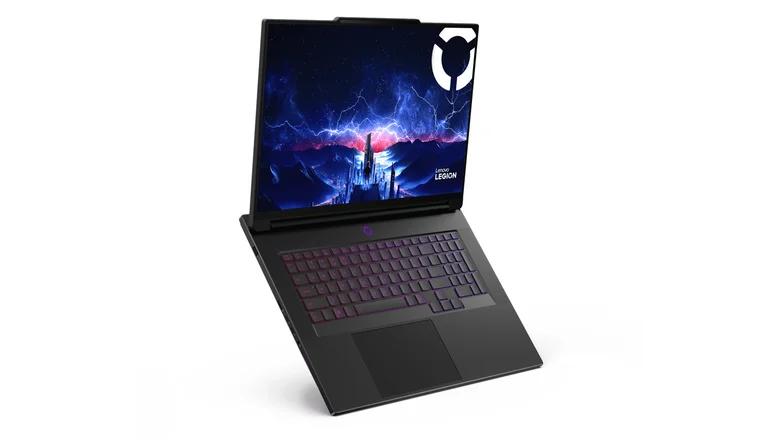
The Lenovo Legion 9i Gen 10 doesn’t try to be the MacBook Pro. It’s a desktop replacement, which happens to be portable. It’s one the most powerful laptops you can get, with a Intel Core Ultra9 275HX CPU featuring 24 cores.
According to NanoReview’s multi-core benchmarks, the Core Ultra 9 delivers almost twice the multi-core performance of the Apple M5. The M5 is still the winner in terms of single-core performance and battery life, but the Legion 9i Gen 10 is in a different league when it comes to workloads which scale across multiple cores such as 3D rendering, video compression, scientific simulations and compiling codebases.
Optional glasses-free 3D via lenticular lens + eye tracking
Battery
99.9Wh (3–5 hrs under gaming load)
Weight
3.2 kg (7.1 lbs)
The RTX5080 graphics card of the Legion 9i Gen 10 is capable of operating at 175W, compared with the MacBook Pro M5 35W. It is possible to run AAA games in 4K Ultra and maintain smooth frames, something that the MacBook Pro M5 is unable to do. For real-time game developers and 3D artists, this is a revolutionary technology.
A glasses-free 3D display is a unique selling feature. The laptop has a switchable display that can be changed between 2D/3D with eye tracking and lenticular lens.
Pros
Cons
RTX 5080 at 175W = desktop-class GPU power
Heavy at 3.2kg — not truly portable
Nearly 2× MacBook Pro M5 multi-core throughput
Battery life is poor under gaming load
RAM is user-upgradeable (not soldered)
Expensive at $3,999+
Optional glasses-free 3D display is unique
4K 240Hz display for elite gaming + work
Loud fans under full load
Asus Zenbook Duo
The ASUS Zenbook Duo is one of the boldest laptops ever. It has two 14-inch 3K 120Hz OLED touchscreen displays. One is on the top like a normal laptop screen. The other is where the keyboard would normally go. Instead of a keyboard, it has a removable Bluetooth keyboard that you put on the bottom screen.
This dual screen setup enables workflows that are completely impossible on a MacBook. Imagine having Premiere Pro’s timeline on the bottom screen while your video preview fills the top or running VS Code and a browser side-by-side across both displays. At $1,799, it’s actually cheaper than the entry-level MacBook Pro M5.
Full Specifications
CPU
Intel Core Ultra 9 285H (22-core)
GPU
Intel Arc iGPU (integrated)
Displays
2× 14-inch 3K OLED 120Hz Touchscreen · 2880×1800
RAM
32GB LPDDR5
Storage
1TB NVMe SSD
Keyboard
Detachable Bluetooth keyboard with trackpad
Battery
75Wh · ~8–10 hrs (single screen mode)
Weight
1.65 kg (3.6 lbs)
The biggest strength of the Zenbook Duo isn’t just raw power, but a rethinking of laptop screen space. Two OLED touch screens give you the same space as a dual monitor desktop but in a case that weighs less than 14 inch MacBook Pro. Coders, multitaskers, and content creators that work with multiple windows, no MacBook can do this.
Pros
Cons
Two full-size 3K OLED touchscreens
Intel Arc iGPU — no dedicated gaming GPU
$200 cheaper than base MacBook Pro M5
Bluetooth keyboard takes some getting used to
Dual-screen multitasking no MacBook can match
Battery drains faster with both screens active
Matches M5 multi-core CPU benchmarks
Unique form factor isn’t for everyone
32GB RAM vs 24GB on MacBook Pro base
Frequently Asked Questions
Q: Is there a Window laptop more powerful than the 2026 Macbook Pro 5 ?
Yes. Windows laptops are superior to the MacBook Pro M5 on many fronts. Laptops such as the Razer blade 14 and Asus ProArt P16 have dedicated NVIDIA RTX GPUs which outperform Apple’s M5 GPU when it comes to gaming, 3D render, and GPU-accelerated creativity tasks. Lenovo Legion 9i Gen 10 Core Ultra 9 CPU delivers almost twice the performance of Apple’s M5 on multi-core benchmarks.
Q: The Razer Blade 14 gaming laptop more powerful than the Macbook Pro?
In gaming and GPU performance, yes significantly so. The Razer Blade 14 NVIDIA RTX 5070 GPU outperforms the M5 integrated GPU by 50 to 60% in synthetic benchmarks, and delivers playable high-framerate gaming at 1440p that the MacBook Pro cannot match. However, in single-core CPU tasks and battery life under light loads, the MacBook Pro M5 still leads due to Apple’s more power-efficient chip architecture.
Q: The Lenovo Yoga Pro 9i Aura Edition worth buying over the Macbook Pro?
For Windows users, absolutely. Lenovo Yoga Pro 9i Aura Edition is priced at $1,950 compared to the $1,999 MacBook Pro M5 and comes with 32GB RAM (24GB on the Mac) and has a beautiful Tandem OLED display, with twice the brightness to the regular OLED, and has multi-core CPU performance on par with the M5. Also, casual gaming is possible on the RTX 5050, while gaming on the MacBook Pro is impossible.
Q: What is the difference between the Macbook Pro and the Lenovo Yoga Pro 9i Aura Edition?
For Windows users, absolutely. Lenovo Yoga Pro 9i Aura Edition is $1,950 cheaper than the MacBook Pro M5 at $1,999, but it comes with 32GB RAM (compared to 24GB in the Mac), an amazing Tandem OLED Display with twice the brightness of regular OLEDs and multi-core CPU power that rivals the M5. The RTX GPU is also capable of casual gaming. This is something that the MacBook Pro has trouble with.